Van Gogh's 'The Starry Night' Unveils Hidden Mathematical Patterns
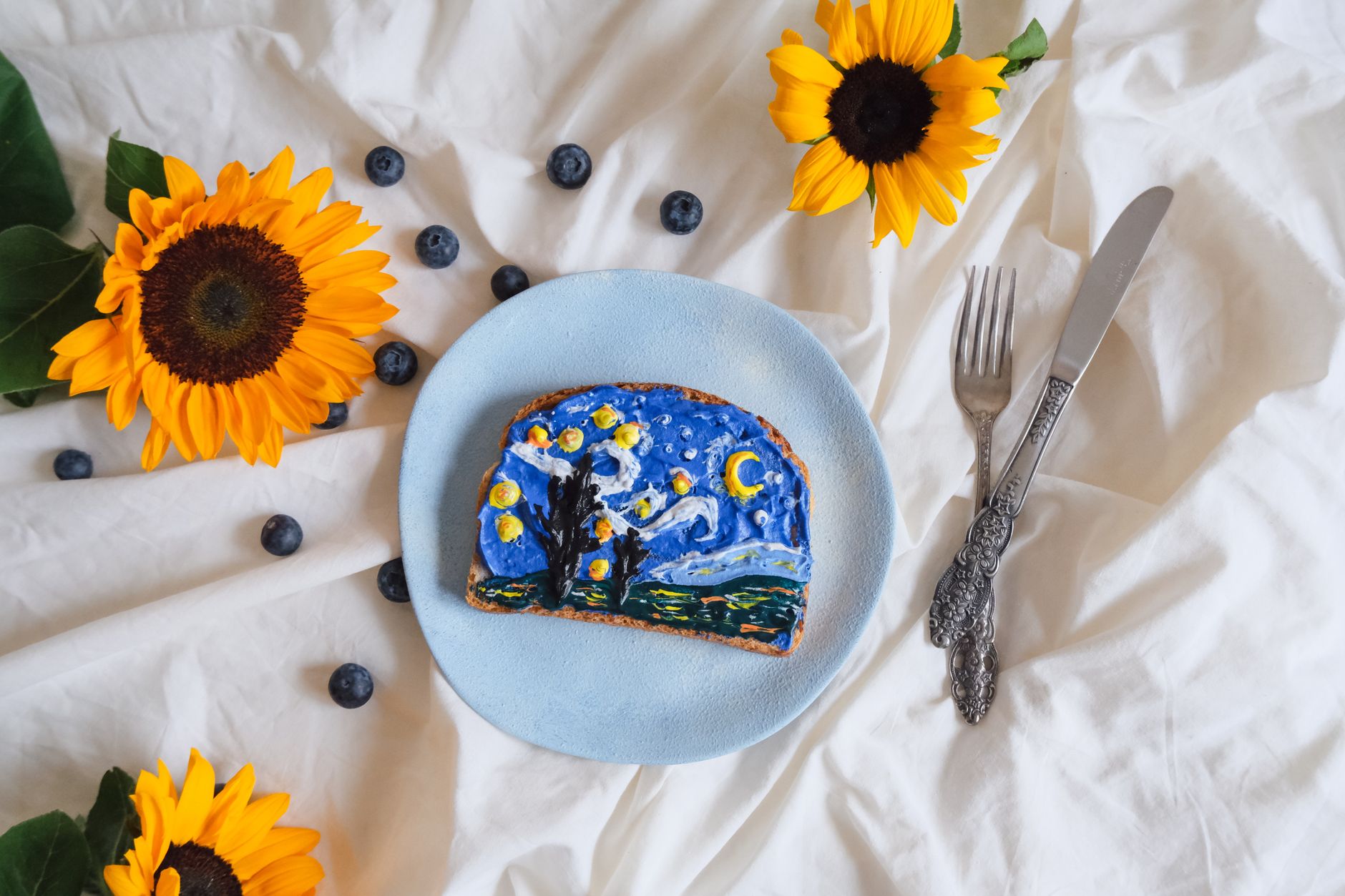
The swirling skies and starlit night depicted in Vincent van Gogh's iconic painting “The Starry Night” have long fascinated art lovers and scientists alike. A recent study by physicists from China and France suggests that van Gogh's masterpiece may embody an intuitive understanding of the complex mathematical principles governing turbulent flow.
Art Meets Physics: The Study and Its Findings
The Study and Its Findings
In a 2026 study published in Physics of Fluids, physicists from Xiamen University, Southern University of Science and Technology, and French institutions analyzed high-resolution images of The Starry Night. They measured the size, spacing, and luminance of the brushstrokes in the swirling sky. The luminance Fourier power spectrum matched the -5/3 Kolmogorov power-law, the same pattern observed in real atmospheric turbulence. A secondary -1 power-law at smaller scales suggested Batchelor-type scalar turbulence.
The Artistic and Mathematical Intersection
Van Gogh painted The Starry Night in 1889 while at the Saint-Paul-de-Mausole asylum in Saint-Rémy. The swirling forms in the sky were long seen as expressive rather than literal. The 2026 analysis showed that the relative distances and intensity of the eddies follow the physical laws governing turbulent flows. Researchers concluded that van Gogh either observed real atmospheric conditions closely or had an intuitive grasp of how turbulence behaves.
Broader Implications and Comparative Analysis
The team compared The Starry Night with other van Gogh works and paintings by different artists. Works from van Gogh's turbulent period, including Starry Night Over the Rhône, showed similar turbulence signatures. Paintings from calmer periods did not. This suggests the artist's mental state or observational focus may have influenced how he rendered fluid motion. The method could be applied to other artworks to study how artists depict natural phenomena.
Significance for Science and Art
The findings bridge art history and fluid dynamics. They show that visual representations can encode physical laws even when the artist has no formal training in science. For physicists, the study demonstrates that turbulence patterns can be identified in non-scientific imagery. For art scholars, it offers a new lens for understanding how van Gogh translated perception into paint.
Future Directions and Ongoing Research
Researchers plan to extend the analysis to more paintings and to other artists. Questions remain about whether van Gogh consciously observed turbulence or whether the match is coincidental. Further work could examine how brushstroke technique and paint application contribute to the observed spectra. The approach may also inform studies of visual perception and pattern recognition.
Conclusion
The Starry Night continues to reveal new dimensions. The 2026 study adds a scientific layer to its enduring appeal, showing that beneath the brushstrokes, van Gogh's sky aligns with the mathematics of turbulent flow. The painting stands as a rare example where art and physics converge in measurable form.
Q&A
What did the 2026 study find in The Starry Night?
Physicists found that the luminance patterns in the painting's swirling sky follow the -5/3 Kolmogorov power-law, characteristic of real atmospheric turbulence. The brushstrokes' size, spacing, and intensity match the physical laws governing turbulent flow. The study was published in Physics of Fluids.
Who conducted the Van Gogh turbulence study?
Researchers from Xiamen University, Southern University of Science and Technology in China, and French institutions collaborated on the analysis. They used high-resolution digital imaging to measure brushstroke characteristics and compare them with turbulence models.