Quantum Computing: Bridging Qubits, Algorithms, Cryptographic Futures
Unraveling the complexities of an emerging technological landscape, a transformative approach promises solutions to previously insurmountable challenges. Innovative structures and computing advancements pave the way for new standards, influencing diverse fields and heralding a sophisticated era in secure data handling and technological superiority.
Beyond Classical Limitations: Innovating with Quantum Algorithms
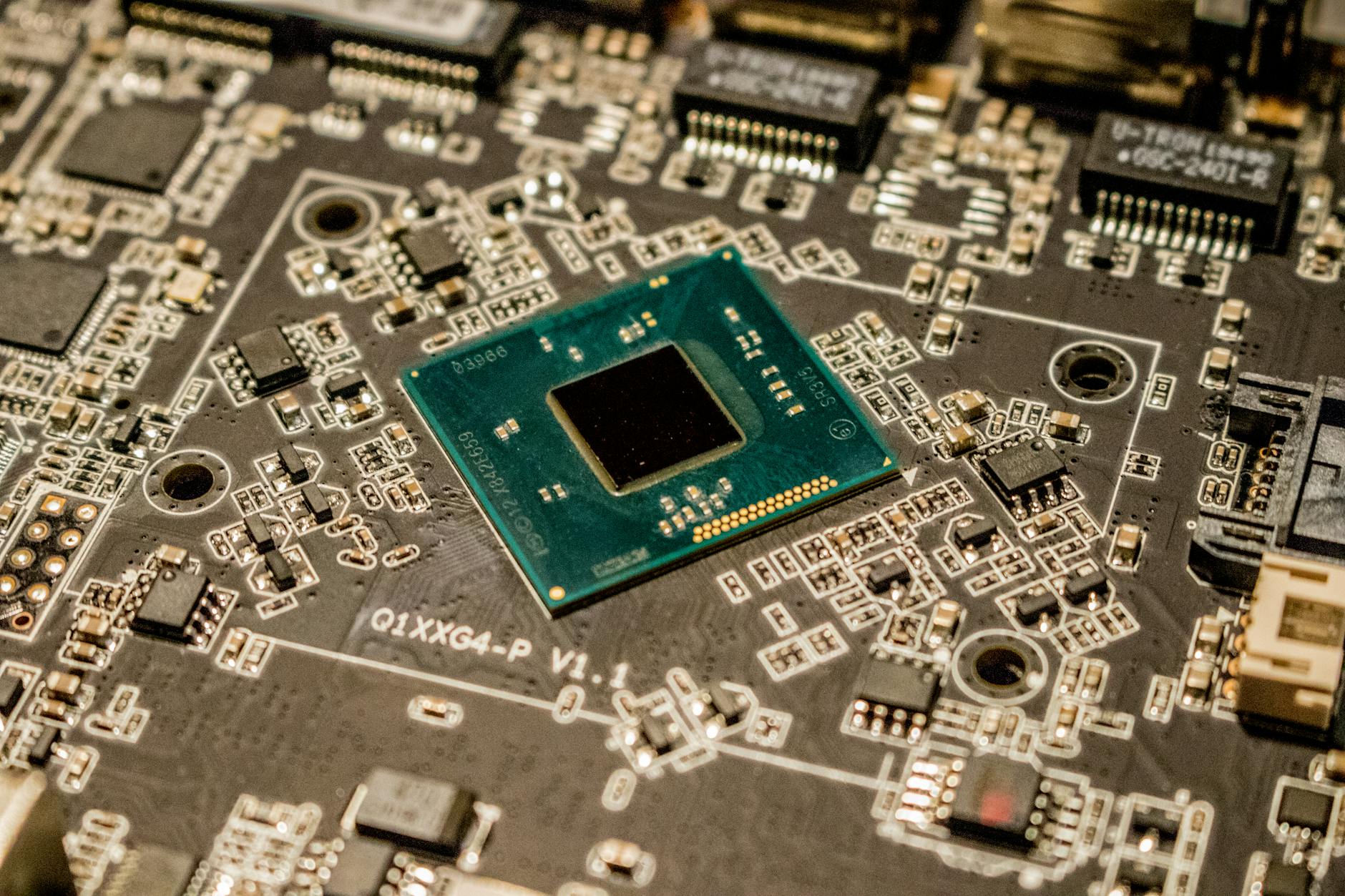
The quantum realm offers extraordinary possibilities through distinctive algorithms, which fundamentally redefine problem-solving methods. These are not just enhancements to classical computing algorithms but represent a paradigm shift. Embracing quantum mechanics, such as superposition and entanglement, these algorithms perform tasks beyond the capabilities of traditional systems, opening pathways that were previously thought impossible.
The Core Engine: How Quantum Algorithms Work
Quantum algorithms exploit superposition and entanglement for computation. Shor's algorithm and Grover's algorithm demonstrate quantum advantages. Quantum gates manipulate qubits to perform operations. Algorithm design is a key research frontier.
A New Toolkit for Complex Challenges
Public plans face political and fiscal constraints. Funding shortfalls can require legislative action. Benefit levels and contribution rates are often contested. Reform efforts aim to balance sustainability and adequacy.
The Bridge to Practicality: Hybrid Approaches and Error Mitigation
Hybrid algorithms combine quantum and classical steps for efficiency. Error mitigation techniques reduce the impact of noise. Fault-tolerant quantum computing remains a long-term goal. Practical applications are emerging with current hardware.
Taming Quantum Chaos: The Quest for Error-Free Computing
The pursuit of practical quantum computing revolves around managing its inherent fragility. Qubits, sensitive to minute environmental shifts, are prone to decoherence, leading to calculation errors. Therefore, developing robust quantum error correction is vital for achieving stable, reliable computation.
Building More Resilient Qubits
Qubit coherence time and error rates limit current capabilities. New materials and designs aim to improve qubit stability. Scaling requires addressing crosstalk and connectivity. Research spans superconducting, trapped ion, and other platforms.
The Power of Error Correction Codes
Qubit coherence time and error rates limit current capabilities. New materials and designs aim to improve qubit stability. Scaling requires addressing crosstalk and connectivity. Research spans superconducting, trapped ion, and other platforms.
Theoretical Frameworks for Quantum Control
Qubit coherence time and error rates limit current capabilities. New materials and designs aim to improve qubit stability. Scaling requires addressing crosstalk and connectivity. Research spans superconducting, trapped ion, and other platforms.
Navigating Quantum Realms: Error Correction and the Cryptography Frontier
Approaching quantum computation's capabilities brings forth significant challenges, particularly in digital security. While quantum computing promises solutions for complex problems, it also poses risks to conventional cryptographic frameworks, requiring reimagined security paradigms.
Decoding Secure Frontiers: Quantum's Impact on Cryptography
Quantum's power particularly threatens cryptography, which relies on computational difficulty to secure digital communications. Current encryption, predicated on problems like factoring large numbers, is vulnerable to quantum breakthroughs. Such systems, once theoretically broken by quantum algorithms, must be reconsidered, prompting immediate responses to ensure long-term data security.
Today's encryption protects digital interactions by exploiting the immense time and resources required to solve certain mathematical problems with classical computers. However, quantum capabilities jeopardize this foundation by solving these problems with unprecedented speed, potentially compromising vast data troves with advanced decryption methods. The possibility of "harvest now, decrypt later," where attackers store encrypted data anticipating future quantum decryption capabilities, highlights the urgency for new, resilient data protection measures.
In addressing current encryption vulnerabilities, a global effort focuses on developing post-quantum cryptography (PQC). PQC doesn't utilize quantum mechanics for encryption but rather introduces algorithms operable on classical infrastructure, resistant to both classical and quantum attacks. These algorithms hinge on novel mathematical challenges that quantum systems can't efficiently resolve, aiming for future-proof security standards against quantum threats. Standardizing PQC involves global collaboration, ensuring universal, reliable implementation across industries, especially in finance and health, establishing robust future data protection.
Quantum systems won't replace classical counterparts. Instead, the computing future lies in a hybrid model, blending classical and quantum strengths for optimal task execution. Classical systems manage infrastructure and data complexities while quantum efficiencies enhance specific problem areas, like massive parallel computations. This hybrid paradigm extends to security: multilayered defenses, integrating PQC into existing frameworks, balance current protection needs with future challenges. Organizations adopting this model gain dynamic security management, fostering resilience against evolving threats.
The Quantum Leap: From Superposition to Hardware Innovation
Quantum computing's evolution isn't about competing with classical systems but advancing in tandem, leveraging quantum mechanics for unparalleled problem-solving potential. Today's innovation focus is on integrating quantum abilities with existing technology, creating a powerful fusion that drives scientific and technical advancement.
Building the Future: The Intersection of Quantum Hardware and Innovation
Quantum computing interrelates classical and quantum processing, enhancing capability through synergy rather than replacement. Innovations in materials and architectures underpin this journey, moving from theoretical possibility to practical application.
Modern computation sees potential in hybrid systems merging classical and quantum benefits. Classical computers orchestrate data frameworks, delegating intensive tasks to specialized quantum processors, achieving synergy in problem management. This collaboration excels in complex scenarios, like chemical simulations and logistical optimizations. Innovations in rapid interconnects enable swift, seamless communication between processor types, forming cohesive computational platforms.
Overcoming classical silicon scaling limitations, future high-performance development hinges on quantum-specific materials and design philosophies. Advanced quantum materials are essential for stable, efficient qubit construction. Simultaneously, architecture advances embrace modularity through technologies like 3D packaging, combining diverse processor types into efficient, scalable systems. These approaches optimize performance and facilitate complex task execution, heralding a new computing generation.
Effective quantum utilization extends beyond hardware to an encompassing ecosystem, the "quantum stack," integrating control signals, programming languages, and software tools. Quantum software engineering optimizes algorithms, adapting scientific challenges to quantum execution. Progress includes distributed quantum systems, proposing quantum networking akin to classical cloud frameworks, enhancing connectivity and pooled computational resources, broadening access to quantum innovation.
Solving real-world problems hinges on practical quantum-classical systems enabling breakthroughs across sectors. Material sciences benefit from precise molecular simulations, accelerating novel material discoveries. In finance and logistics, quantum algorithms streamline optimization processes, unlocking efficient resolutions to complex resource management. Machine learning enhancements driven by quantum capabilities promise to refine pattern analysis. As quantum hardware stabilizes and integrates with existing technologies, it facilitates groundbreaking discoveries, transforming how industries approach long-standing challenges.
Q&A
What are qubits and how do they differ from classical bits? Qubits, or quantum bits, are the fundamental units of information in quantum computing. Unlike classical bits that can be either 0 or 1, qubits can exist in a state of superposition where they represent both 0 and 1 simultaneously. This property allows quantum computers to process complex calculations more efficiently than classical computers.
How does superposition enhance the power of quantum algorithms? Superposition enables quantum algorithms to perform multiple calculations at once. By leveraging this, quantum algorithms can solve certain problems exponentially faster than classical algorithms. For instance, algorithms like Shor's and Grover's exploit superposition to factor large numbers and search unsorted databases more efficiently.
What role does error correction play in quantum computing? Error correction matters for quantum computing due to the fragile nature of qubits, which are susceptible to decoherence and noise. Quantum error correction codes are used to protect quantum information, ensuring reliable computation. These codes help maintain the integrity of qubits over time, which supports practical quantum computing applications.
What are the current challenges in quantum hardware development? Quantum hardware development faces several challenges, including maintaining qubit stability, scalability, and error rates. Researchers are working on various technologies, such as superconducting circuits and trapped ions, to build more robust and scalable quantum processors. Overcoming these challenges is key to realizing the full potential of quantum computing.
How could quantum computing impact cryptography? Quantum computing poses a significant threat to current cryptographic systems. Algorithms like RSA and ECC, which are widely used for secure communications, could be broken by quantum computers using Shor's algorithm. This potential impact drives the development of quantum-resistant cryptographic methods, such as lattice-based cryptography, to ensure data security in the quantum era.