Ethical Frontiers in the Age of Human-Machine Integration
The fusion of organic and digital realms is reshaping our understanding of human potential, extending physical and mental boundaries. As we stand on the precipice of profound transformation, the delicate interplay of advancing innovation and moral inquiry promises to redefine the essence of what it means to be human.
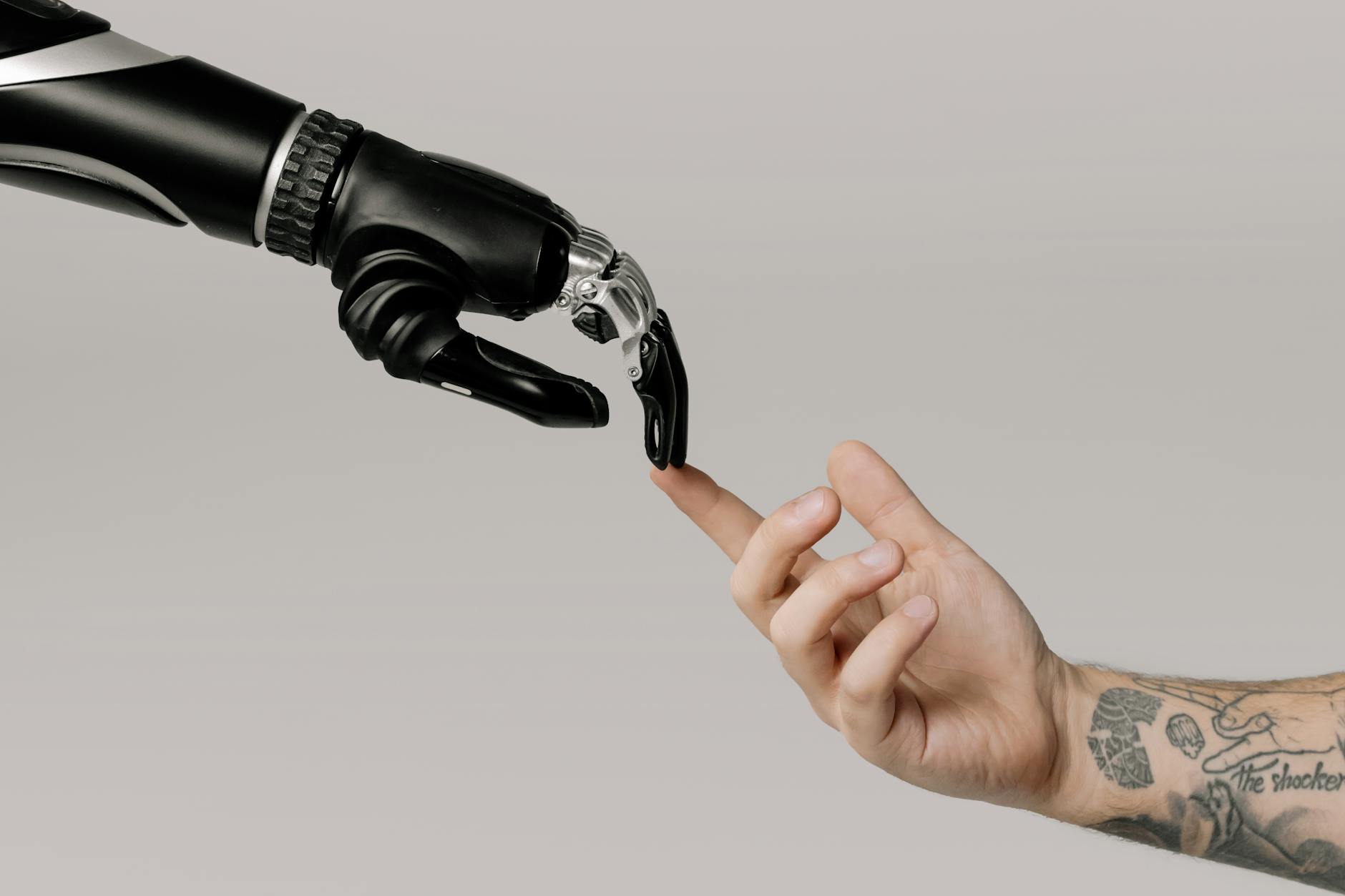
Transforming Human Potential with Emerging Technologies
Our abilities have long been perceived as fixed by our biological makeup and the physical world. Yet, the integration of technology with human functions is challenging these limitations, promising a future where enhanced human capabilities are not just possible but increasingly prevalent.
Empowering Physical Abilities with Technological Assistants
Physical enhancement technologies such as exoskeletons and modern prosthetics are radically changing how we approach mobility and strength. These advancements are not merely tools but extensions of the human body, designed to augment or restore capabilities.
Exoskeletons like those from ReWalk Robotics offer spinal cord injury patients the ability to walk again, illustrating how technology can provide unprecedented support. By supporting movement with motorized assistance and sensing user intentions, they help reduce injury risks in industrial settings, offering a connection between safety and efficiency. Similarly, advanced prosthetic limbs, exemplified by Open Bionics' Hero Arm, are redefining what prosthetics can achieve. These devices integrate with the user's nervous system, offering intuitive control and even restoring a sense of touch. As these devices evolve, they challenge societal perceptions of disability, potentially shifting cultural acceptance towards greater inclusivity.
Enhancing Cognitive Functions Through Advanced Systems
Cognitive enhancement is pushing the boundaries of what our minds can achieve by leveraging brain-computer interfaces (BCIs). These interfaces allow for direct communication between the brain and digital systems, promising significant advancements in both medical recovery and enhancement for healthy individuals.
For those with severe mobility impairments, BCIs can offer a means to control external devices using thoughts alone, such as navigating computers or operating robotic limbs. Beyond these restorative applications, cognitive tools like Modafinil are also being used to enhance focus among healthy individuals, raising questions about fairness and potential long-term effects. These advances pose ethical challenges regarding access and the implications of enhanced cognitive abilities.
Sensory Enhancement and the Expansion of Perception
These devices bring profound cultural impacts, particularly in communities where deafness is a strong cultural identity. The shift from a purely natural experience to one enhanced by technology opens discussions about identity and inclusivity. Furthermore, as sensory enhancements become more integrated into everyday life, they may alter how society perceives and values different sensory capabilities.
The realm of sensory enhancement is broadening human experiences by extending or restoring senses through technology. Cochlear implants, for instance, are revolutionizing hearing restoration, blurring the identity lines between those with traditional biological senses and those with tech-assisted senses.
Navigating the Ethical Landscape of Human Augmentation
As we delve deeper into human augmentation, ethical considerations become paramount. The benefits of enhanced capabilities must be weighed against potential social and moral challenges.
Addressing Fairness and Equity in Technological Access
Multiple factors influence outcomes in this area. Research and practice inform current approaches. Context and individual circumstances affect results. Ongoing development continues to refine methods.
Privacy and Autonomy in a Connected and Enhanced World
Multiple factors influence outcomes in this area. Research and practice inform current approaches. Context and individual circumstances affect results. Ongoing development continues to refine methods.
Combating Bias in Technological Systems
Multiple factors influence outcomes in this area. Research and practice inform current approaches. Context and individual circumstances affect results. Ongoing development continues to refine methods.
Shaping a Future of Integrated Human Potential
As human augmentation continues to evolve, the potential benefits are vast, from restoring abilities to surpassing natural limits. However, navigating the ethical complexities requires a thoughtful, inclusive approach. By addressing privacy, equity, and bias, we can harness the transformative power of technology to uplift human experience, ensuring a future that is not only technologically advanced but also ethically sound and universally accessible. The journey from mere enhancement to deep integration with technology will define the narratives of the coming decades, challenging us to redefine what it means to be human in an era of unprecedented potential.
Q&A
What are Brain-Computer Interfaces and how do they work? Brain-Computer Interfaces (BCIs) are systems that facilitate direct communication between the brain and external devices. They work by detecting brain signals, often through electrodes placed on the scalp or implanted in the brain, and translating these signals into commands that can control computers, prosthetics, or other devices. This technology has applications in restoring movement for individuals with paralysis and enabling direct control of devices for those with severe physical disabilities.
How do exoskeletons assist individuals with mobility impairments? Exoskeletons are wearable robotic devices that support and enhance the movement of individuals with mobility impairments. They function by mimicking the natural movement of limbs, providing additional strength and support to the user. This technology is particularly beneficial for rehabilitation purposes, helping individuals regain mobility and strength through repetitive and controlled movements.
In what ways can sensory enhancement technologies benefit users? Sensory enhancement technologies are designed to augment or restore sensory capabilities. For example, they can help individuals with visual or auditory impairments by providing enhanced or substitute sensory input, such as through visual prosthetics or cochlear implants. These technologies can significantly improve the quality of life by increasing independence and facilitating interaction with the environment.
What are the potential ethical implications of cognitive enhancement technologies? Cognitive enhancement technologies, which aim to improve mental functions like memory, attention, and problem-solving, raise several ethical concerns. These include issues related to fairness and access, as such enhancements could create disparities between those who can afford them and those who cannot. Additionally, there are concerns about the long-term effects on identity and personal autonomy, as well as the potential for misuse in competitive environments.
How do prosthetic limbs integrate with the human body to improve functionality? Modern prosthetic limbs integrate with the human body through advanced materials and technologies that mimic natural limb functions. They often use sensors and microprocessors to detect muscle signals and translate them into movements, allowing for more natural and precise control. This integration not only improves functionality but also enhances the user's quality of life by providing greater independence and the ability to perform daily activities more effectively.