

Registered Nursing Uncovered Quick And Budget Friendly Guide
Registered nurses (RNs) form the backbone of healthcare delivery, providing direct patient care in hospitals, clinics, schools, long-term care facilities, and community settings. With the Bureau of Labor Statistics projecting 195,400 new RN positions annually through 2032, demand far outpaces supply. Entry paths include the Associate Degree in Nursing (ADN) at community colleges—typically 2 years and $5,000–15,000 total—or the Bachelor of Science in Nursing (BSN) at four-year institutions, which runs $20,000–80,000+ depending on public vs. private. Accelerated BSN programs compress coursework to 12–18 months for students who already hold a bachelor's in another field. Many hospitals now prefer or require BSN-prepared nurses; Magnet-designated facilities often mandate it. RN-to-BSN bridge programs allow ADN nurses to complete the bachelor's online while working, typically in 12–24 months. Nursing offers job security, competitive wages averaging $75,000–90,000, and diverse settings from critical care to school nursing to telehealth. The profession appeals to career-changers and those seeking a meaningful, stable career with opportunities for advancement.
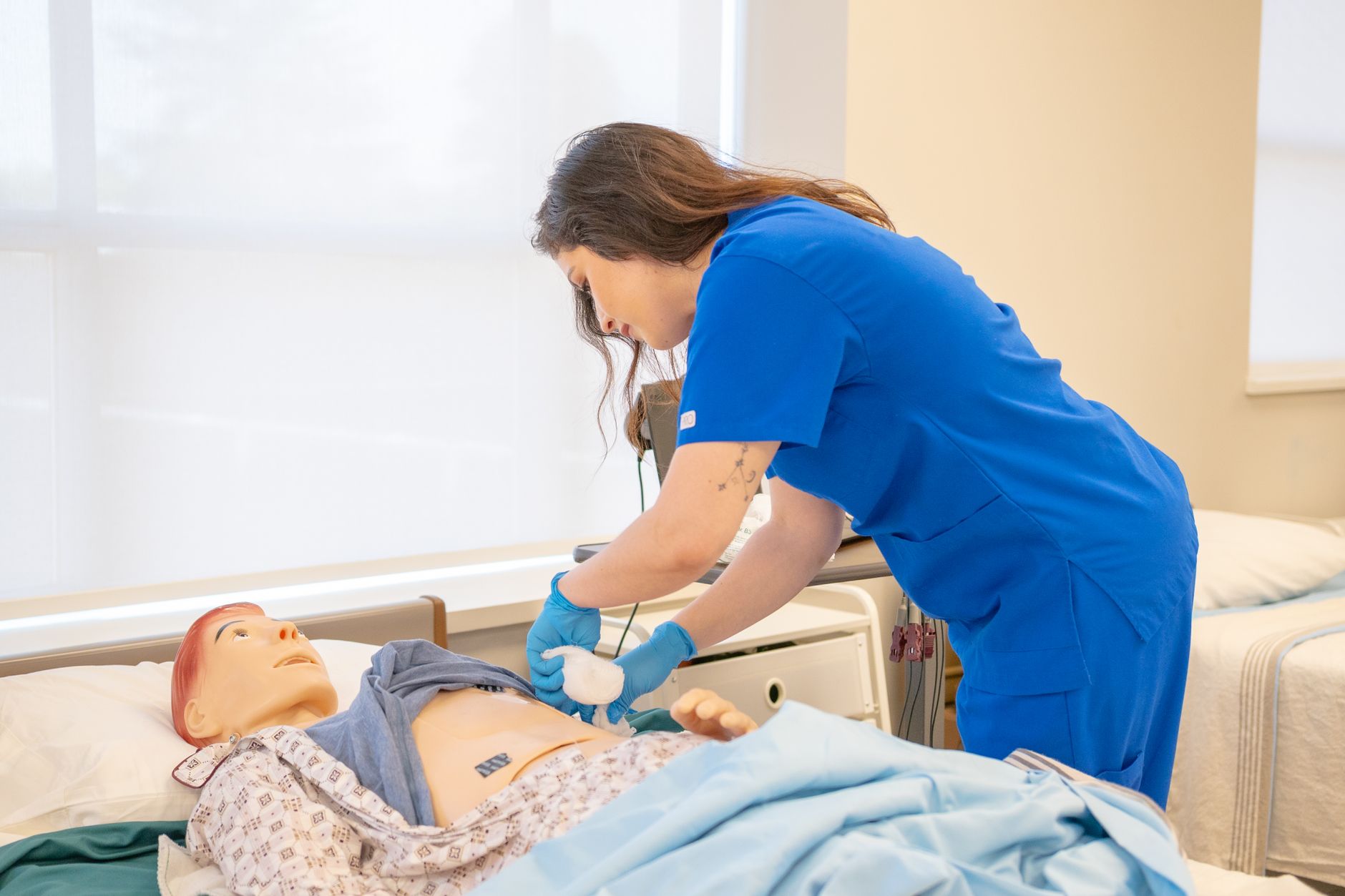
Budget-Friendly Paths to RN Licensure
Community college ADN programs offer the lowest-cost route to RN licensure. Tuition at in-district rates often falls under $10,000 for the full program; out-of-state and private programs cost significantly more. Federal Pell Grants, which don't require repayment, can cover a substantial portion for eligible students. Nursing-specific scholarships from hospitals, professional organizations (AACN, ANA), and foundations reduce out-of-pocket cost. Some hospitals offer tuition reimbursement or loan repayment in exchange for a 2–3 year employment commitment—typically $5,000–15,000 annually. Working as an LPN or CNA while completing prerequisites or an ADN program provides income and clinical experience. Compare programs by NCLEX-RN pass rates (aim for 90%+), job placement rates, and clinical placement support; weak programs can delay graduation and licensure. Accelerated BSN programs suit career-changers with a prior degree but are intensive—expect 40+ hours weekly of coursework and clinicals. Part-time ADN or BSN tracks extend the timeline but allow work. Clinical placement is critical: programs with strong hospital partnerships place students more reliably. Ask about placement support before enrolling.
Financial Aid and Loan Forgiveness
Federal Direct Unsubsidized Loans and Grad PLUS Loans (for BSN and beyond) are available to nursing students. Income-driven repayment plans cap monthly payments based on income. Public Service Loan Forgiveness (PSLF) forgives remaining federal loan balance after 10 years of qualifying employment at nonprofits or government agencies—most hospitals qualify. Nurse Corps Loan Repayment Program offers up to 85% loan repayment for nurses working in critical shortage facilities. State-specific programs (e.g., California's Nurse Education Initiative) provide grants and loan repayment. Military service (Army, Navy, Air Force) offers tuition assistance and the GI Bill for veterans and active-duty spouses. Plan your financing before enrolling; mixing grants, scholarships, and strategic loan use minimizes debt.
After Licensure: Residency, Specialization, and Growth
Passing the NCLEX-RN is the final step to licensure; first-time pass rates for U.S.-educated nurses average 85–90%. New graduate residency programs—offered by many health systems—provide structured orientation, mentorship, and reduced patient loads during the first 6–12 months. These programs improve retention and confidence. Sign-on bonuses of $5,000–20,000 are common in high-demand regions; relocation assistance may also be offered. RN salaries average $75,000–90,000 annually, with higher pay in California, Hawaii, and urban markets. Specialization (ICU, OR, ED, labor and delivery) often requires additional certification or on-the-job training; certified nurses typically earn 5–15% more. Continuing education is required for license renewal in most states—typically 15–30 contact hours per renewal cycle.
BSN Completion and Career Advancement
ADN nurses who complete a BSN gain access to management, education, and advanced practice pathways. Online RN-to-BSN programs allow full-time work while studying; many can be completed in 12–18 months. Employer tuition reimbursement often covers a significant portion. BSN-prepared nurses are preferred for charge nurse, unit manager, and clinical educator roles. Those pursuing nurse practitioner, clinical nurse specialist, or nurse anesthetist roles need an MSN or DNP—plan for 2–4 additional years and $30,000–80,000. The investment in nursing education pays dividends: job security, competitive wages, and opportunities to advance without leaving patient care.
Prerequisites and Program Selection
Nursing programs require prerequisites: anatomy and physiology, microbiology, chemistry, and statistics. Completing these at a community college before applying can save thousands. Some programs offer conditional acceptance pending prerequisite completion. Waitlists are common at competitive schools; apply early and to multiple programs. Accelerated BSN programs suit career-changers with a prior degree but are intensive—expect 40+ hours weekly of coursework and clinicals. Part-time ADN or BSN tracks extend the timeline but allow work. Clinical placement is critical: programs with strong hospital partnerships place students more reliably. Ask about placement support before enrolling.
Registered nursing remains one of the most accessible paths to a stable, well-compensated career in healthcare. With strategic planning—choosing budget-friendly programs, leveraging financial aid, and completing BSN when feasible—you can enter the profession without excessive debt while positioning for long-term advancement. The profession rewards dedication: nurses who invest in their education and specialize often see strong returns through higher pay, better schedules, and greater job satisfaction.