

Embracing Biodegradables The New Wave In Drug Packaging Sustainability
Pharmaceutical packaging is shifting toward biodegradable and recyclable materials to reduce plastic waste and meet sustainability goals. Traditional blister packs, bottles, and secondary packaging rely heavily on PVC, HDPE, and multi-layer laminates that persist in the environment for centuries. New options include PLA (polylactic acid) from plant starch—NatureWorks Ingeo is a leading supplier at roughly $2.50/kg—PHA (polyhydroxyalkanoates) from Danimer Scientific, paper-based blisters from companies like BillerudKorsnäs, and compostable films from Innovia Films. Regulatory requirements—child resistance per 16 CFR 1700, moisture barrier (often <1 g/m²/day for sensitive drugs), light protection, and stability over shelf life—limit how quickly pharma can adopt new materials. The pharmaceutical industry faces unique challenges: drugs must be protected from moisture, light, and contamination throughout their shelf life, often 2–5 years. Any new packaging material must undergo ICH Q1A stability testing to ensure it doesn't compromise drug safety or efficacy. Pressure from regulators, investors, and consumers is driving meaningful progress. Sustainability targets from companies like Pfizer (carbon neutral by 2030) and Johnson & Johnson (100% recyclable packaging by 2026) are accelerating adoption.
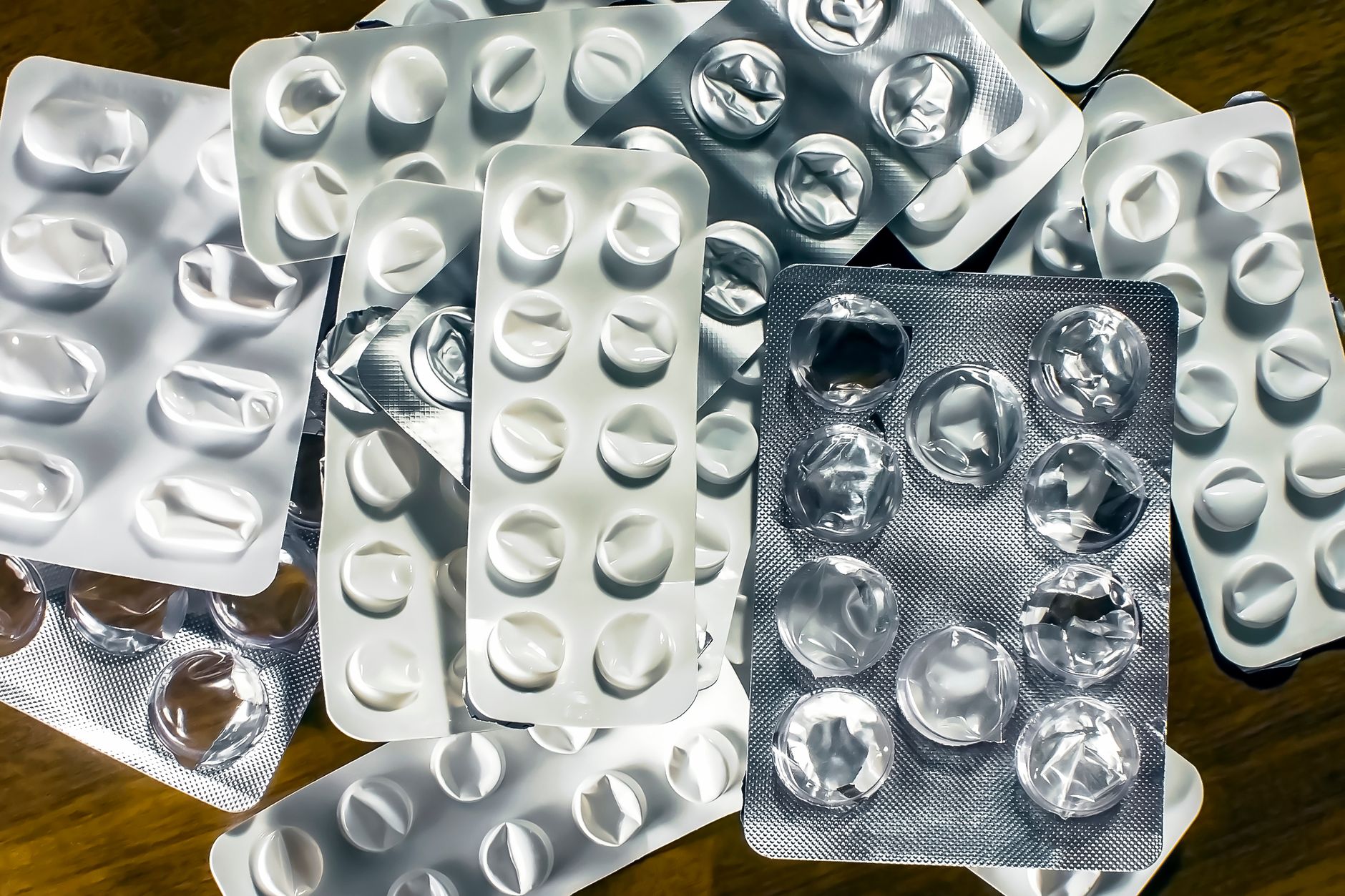
Materials in Development
The shift from conventional plastics to bio-based alternatives is accelerating. NatureWorks Ingeo PLA production capacity exceeds 150,000 tons annually. Danimer Scientific's PHA is used in straws and flexible packaging; pharma applications are in development. Paper-based solutions from BillerudKorsnäs and Stora Enso use cellulose fibers with barrier coatings; pilot projects with OTC medications are underway in Europe. Cost remains a barrier: PLA runs 50–80% more than PET per unit; economies of scale and policy support could narrow the gap by 2030.
PLA and PHA break down under industrial composting conditions (ASTM D6400: 58°C, 60% humidity); home composting often isn't sufficient. Paper blisters from Amcor and Sonoco are in pilot stages; barrier coatings from Michelman and BASF must protect moisture-sensitive drugs. Recyclable mono-materials (single polymer) simplify recycling—mono-PE from Berry Global and mono-PP from Gerresheimer replace multi-layer laminates that are difficult to separate at MRFs. Cold-chain drugs (2–8°C) pose challenges—barrier properties must be maintained throughout distribution. Cost premiums: biodegradable materials often run 15–40% more than conventional; PLA costs roughly $2.50–3.50/kg vs. $1.20–1.80/kg for PET. Drug-device combination products (GSK Ellipta inhalers, AbbVie Humira pens) add complexity. Researchers at Fraunhofer and MIT are exploring bio-based plastics from seaweed (Notpla), cellulose (Sappi), and agricultural waste.
Regulatory and Safety Considerations
FDA and EMA encourage sustainable packaging where it doesn't compromise drug safety. Any packaging change requires stability studies (typically 6–12 months accelerated plus long-term) and possibly a CMC supplement or Type II variation. Child-resistant and senior-friendly requirements (ISO 8317, 16 CFR 1700.20) must still be met. Extractables and leachables testing per USP <1663> and <1664> ensures new materials don't interact adversely with drug formulations. FDA's 2022 draft guidance on use of recycled plastics in drug packaging outlines data requirements. Engage regulatory affairs early; plan for 18–24 months for significant material changes.
Industry Drivers and Collaboration
Consumer and investor pressure for sustainability is growing. Extended producer responsibility (EPR) laws in Maine, Oregon, and California may increase packaging costs for non-recyclable materials. Pharma companies like Pfizer, Johnson & Johnson, and Novartis have set net-zero and circular economy goals. The Pharmaceutical Supply Chain Initiative (PSCI) and Healthcare Plastics Recycling Council (HPRC) share research and best practices. Pilot projects with select products—e.g., OTC vitamins or topical creams—allow learning before broader rollout. Tip: join the Sustainable Packaging Coalition or attend Pack Expo to stay current on emerging technologies.
Reducing Packaging Footprint
Beyond material substitution, reducing overall packaging lowers environmental impact. Right-sizing eliminates excess void space—McKesson and Cardinal Health have reduced secondary carton sizes by 20–30% in pilot programs. Unit-dose packaging may reduce waste when patients don't complete therapy; however, it increases material per dose. Eliminating secondary cartons where possible (e.g., Amazon Pharmacy's minimalist approach), using lighter materials, and optimizing palletization reduce transport emissions. Lifecycle assessments (LCAs) per ISO 14040 help compare options—sometimes traditional materials with efficient design outperform newer materials with higher production impact. Tools like Sphera and GaBi support LCA modeling.
Supplier and Partnership Strategies
Engage packaging suppliers early in product development—ideally at Phase 2. Suppliers with R&D dedicated to sustainable materials—Amcor's AmPrima, Berry's PCR offerings, Gerresheimer's eco-friendly vials—can co-develop solutions. Consider 3–5 year partnerships to justify supplier investment in new capabilities. Attend Pharmapack Europe and CPhI to stay abreast of emerging technologies. Pilot with suppliers who can scale—small-scale pilots that can't transition to production waste resources. Request sustainability reports (GRI or SASB format) and product-specific documentation including recycled content certificates.
Consumer and Stakeholder Communication
Consumers are increasingly aware of packaging waste. Communicate efforts transparently—avoid greenwashing by making only claims you can substantiate (FTC Green Guides). Sustainability reports and packaging labels (How2Recycle, OPRL) inform consumers about recyclability. Investors and customers may ask about packaging strategy; having a clear roadmap demonstrates commitment. Engage with NGOs like As You Sow and industry groups that advocate for sustainable packaging. Tip: include recycling instructions on packaging—"Check locally" for programs that accept the material. Step-by-step: (1) conduct a packaging audit, (2) identify quick wins, (3) pilot new materials with stability studies, (4) scale successful pilots, (5) communicate results to stakeholders.