

Improving Efficiency The Role Of Stacker Cranes In Warehouse Automation
Stacker cranes—automated vertical storage and retrieval systems—are central to modern warehouse automation. They move within narrow aisles (typically 5–6 feet), reaching heights of 40 feet or more, to store and retrieve pallets or cases with precision and speed. Compared to traditional forklifts, stacker cranes increase storage density by 50% or more, reduce labor costs by 60–80%, and improve pick accuracy to 99.9%+. They're a key component of AS/RS (automated storage and retrieval systems) used in distribution centers for Amazon, Walmart, and cold storage facilities for companies like Lineage Logistics. As e-commerce and logistics demand grow, warehouse operators seek ways to maximize space—stacker cranes enable buildings to use vertical space that would be inaccessible with manual equipment. In markets like Los Angeles and New Jersey where land costs $15–30 per square foot, the ability to store more in the same footprint directly improves economics.
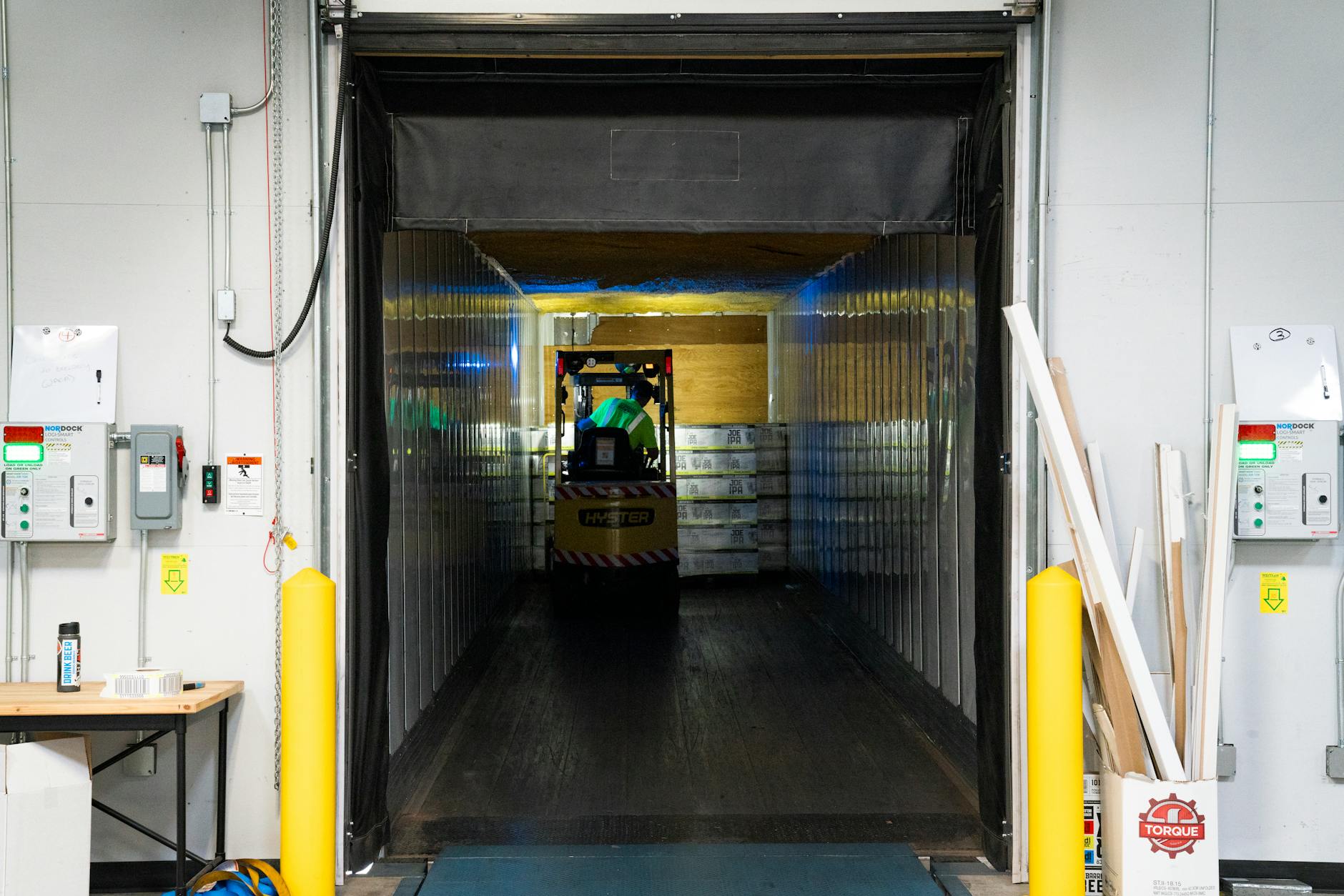
How Stacker Cranes Work
Modern stacker crane systems consist of three main components: the mast (vertical structure), the carriage (load-handling device), and the rail system. Top-running cranes have rails at ceiling level for maximum stability at height; bottom-running units are less expensive but may have height limitations. Dematic's Multishuttle and SSI Schaefer's Exyz systems represent the latest in high-speed, multi-deep storage. Cycle time benchmarks: single-deep pallet retrieval in 60–90 seconds; case handling in 15–30 seconds per pick.
Stacker cranes run on rails at the base and often at the top of the aisle. A mast supports a load-handling device (forks, clamp, or platform) that travels vertically and horizontally. Single-mast units from Dematic, SSI Schaefer, or Vanderlande serve one aisle; double-mast units can span two. Operations are controlled by a WMS (Manhattan, Blue Yonder, SAP EWM) that directs which loads to store or retrieve. Cycle times vary: high-performance cranes from Mecalux or AutoStore can complete store/retrieve cycles in 45–90 seconds. Systems operate in fully automated, semi-automated, or manual modes. Tip: ensure floor flatness within 1/8 inch over 10 feet—critical for rail alignment.
Benefits Over Traditional Methods
Narrow aisles (5–6 feet vs. 12–14 feet for forklifts) allow 50%+ more storage in the same footprint. Automation reduces labor—one operator can manage 10+ cranes vs. one forklift per driver. Accuracy improves: no mispicks from human error; barcode scanning at each step ensures correct SKU. Systems operate 24/7 with minimal breaks. FIFO, FEFO, or slotting rules are enforced by software. Integration with conveyors (Hytrol, Dorner), sortation (Bastian, Beumer), and robotics (Locus, 6 River Systems) creates end-to-end automation. ROI typically achieved in 3–5 years for high-volume operations.
Implementation Considerations
Stacker cranes require significant capital: $150,000–$400,000 per aisle for pallet systems, $80,000–$200,000 for case-handling. Building compatibility matters: ceiling height (minimum 30 feet for meaningful density), floor flatness, column spacing (typically 30–40 feet). Retrofitting existing facilities may require structural modifications—budget $50–150 per square foot for upgrades. Lead times: 6–18 months from order to go-live. Work with integrators like System Logistics, Knapp, or Daifuku who understand your SKU mix and throughput. Pilot in one zone (e.g., 2–4 aisles) before full rollout. Maintenance: budget 2–4% of equipment cost annually; spare parts and 24/7 support contracts are critical.
When Stacker Cranes Make Sense
Best for high-volume, repetitive pallet or case handling—100+ pallets per day per aisle. Less suitable for highly variable SKUs, slow-moving inventory, or facilities with ceiling heights under 25 feet. Evaluate total cost of ownership: equipment, installation, software, maintenance, and training. For operations moving 500+ pallets daily, stacker cranes typically deliver ROI within 3–5 years. For lower volume, consider semi-automated options or traditional forklifts.
Integration with WMS and Automation
Stacker cranes operate under WMS direction. The WMS receives orders, determines optimal storage and retrieval sequences (wave picking, batch picking), and sends instructions to the crane controller via WCS (warehouse control system). Integration with ERP (SAP, Oracle), order management (Salesforce Commerce Cloud), and conveyor systems creates seamless flow. Slotting optimization—placing fast-movers in accessible locations—can improve throughput by 15–25%. Real-time inventory visibility and cycle counting are enabled by the system's precision. Plan for WMS capabilities and integration during selection; API compatibility and EDI support matter.
Vendor Selection and Project Management
Work with integrators who have experience in your industry—e.g., Dematic for retail, Knapp for pharma. Request references and site visits to similar operations. Understand total scope: equipment, software, installation, training, and 2–5 year support. Project timelines: 12–24 months from design to go-live for large deployments. Dedicate internal project management; coordination between construction, IT, and operations is critical. Plan for phased rollout if scope is large—e.g., Phase 1: receiving and storage, Phase 2: picking and shipping.
Alternative Automation Technologies
Stacker cranes are one option. AMRs from Locus, 6 River Systems, or Geek+ transport goods between zones—flexible but may not match crane density. Shuttle systems (AutoStore, Exotec) use smaller vehicles within aisles; good for small-item fulfillment. Conveyors and sortation handle high-volume flow. The right mix depends on SKU characteristics, throughput (orders per hour), and facility layout. Some operations combine: cranes for pallet storage, robots for case transport, conveyors for sortation. Consult integrators who can model different approaches—request throughput and cost comparisons. Implementation steps: (1) assess current operations and growth projections, (2) request proposals from 2–3 integrators, (3) conduct site visits to similar installations, (4) pilot in one zone, (5) scale based on results. Budget for 10–15% contingency on capital projects.