

Affordable Bathroom Adaptations For Seniors Exploring Walk In Showers And Uk Grant Options
Falls in the bathroom are a leading cause of injury among older adults in the UK. Walk-in showers with low or level-access thresholds, grab rails, and non-slip flooring significantly reduce risk. The good news: financial support exists. Disabled Facilities Grants (DFGs) from local councils provide up to £30,000 for eligible adaptations in England and Wales; Scotland and Northern Ireland have equivalent schemes. VAT is zero-rated on many mobility products when supplied to disabled persons. Understanding eligibility and the application process helps you access support. This guide covers grant eligibility, product options, finding installers, and practical considerations for bathroom adaptations.
Grant Eligibility and Process
DFGs are means-tested; homeowners and private tenants may qualify. The council's occupational therapy (OT) team assesses need and recommends specific adaptations. You must be disabled or have a disabled person in the household. The application involves an OT assessment, grant application form, and—for homeowners—a test of financial resources (your income and savings may affect how much you receive; some receive the full grant). Processing can take several months; start early. Some councils offer fast-track routes for urgent cases. Landlords must give permission for adaptations in rented properties. In Scotland, the scheme is called the Scheme of Assistance; in Northern Ireland, the Housing Executive administers grants. The OT assessment is free—request one as soon as you identify a need. Bring supporting evidence: GP letters, mobility assessments, or hospital discharge notes.
What the Grant Covers
Eligible works include: level-access showers, grab rails, raised toilet seats, bath lifts, and non-slip flooring. Structural changes (e.g. widening doorways) may be included. The grant does not cover general refurbishment or cosmetic upgrades. Councils may require multiple quotes from approved contractors. The grant is paid in stages—often an initial payment and a final payment on completion. You may need to pay the contractor first and claim back, or the council may pay directly. Check your council's specific process. Minor adaptations (e.g. grab rails only) may be funded without a full grant application through smaller schemes. Ask your OT what is available in your area. Some councils offer discretionary top-ups for cases where the standard grant is insufficient.
Product Options
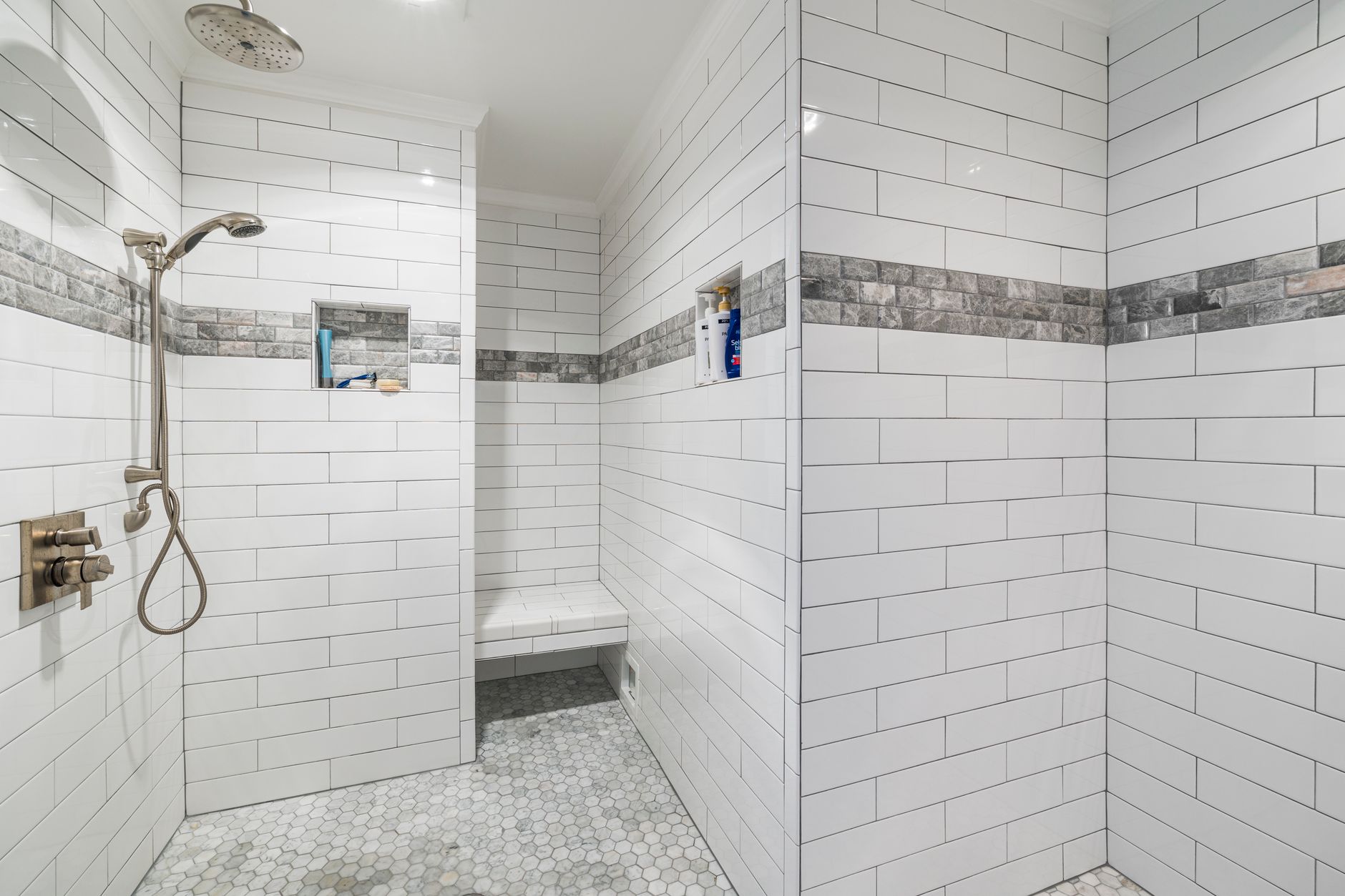
Level-access showers eliminate step-over thresholds; fold-down seats and thermostatic mixers suit varying mobility levels. Low-profile trays (under 50mm) minimise trip hazards. Consider slip-resistant flooring (vinyl, rubber, or textured tiles) and adequate lighting. Products bearing the TrustMark or similar accreditation indicate vetted installers. Thermostatic mixers prevent scalding—important for those with reduced sensation. Grab rails should be installed at the correct height for the user; your OT can advise. Non-slip mats inside and outside the shower add extra safety. If space allows, a wet room (fully waterproofed floor) offers maximum flexibility. Consider future needs: will the user need a wheelchair-accessible layout? Shower doors that open outward or slide can improve access. A handheld shower head allows flexibility for seated users.
Finding Installers
Use the TrustMark scheme to find registered bathroom adapters. Age UK and Independent Age offer advice and may signpost local providers. Get at least three written quotes; ensure installers understand grant requirements and can work with your council's specifications. Some charities (e.g. Turn2us) offer grants for smaller adaptations when council funding is insufficient. Ask installers for references from similar projects. Check that they are familiar with DFG paperwork—some councils require specific forms or certification. Installation typically takes 3–7 days; discuss access and disruption. A good installer will liaise with your OT if needed to clarify requirements.
VAT Relief
VAT is zero-rated on many mobility products when supplied to chronically sick or disabled persons. This applies to walk-in shower components, grab rails, and certain bathroom equipment. The supplier will ask you to complete a declaration form. Savings can be significant—VAT at 20% on a £3,000 installation means £500 saved. Check HMRC guidance (VAT Notice 701/7) for eligibility criteria. Eligibility is based on the person's condition, not age—many older people qualify. Keep a copy of your completed declaration for your records.
Practical Considerations
Plan for disruption: bathroom adaptations typically take 3–7 days. If you have only one bathroom, discuss alternatives with your OT—some councils provide temporary facilities. Consider future needs: a slightly wider shower or extra grab rail may cost little more now but extend the useful life of the adaptation. Heating and ventilation matter for comfort and mould prevention. Underfloor heating can be included in some grant-funded works. Ensure adequate lighting—motion sensors can help for night-time use. Consider a non-slip shower seat if standing is difficult. If you have a bath you're replacing, discuss whether a bath lift would suffice for a lower cost—though walk-in showers are often preferred for long-term mobility.
Summary and Next Steps
Contact your local council's adult social care or housing team to request an occupational therapy assessment. Gather proof of disability and, if applicable, financial information for the means test. Research product options and get quotes from TrustMark-registered installers. Apply for the grant as soon as possible—processing can take months. If you are a tenant, obtain written landlord permission before applying. Age UK (0800 678 1602) and Independent Age offer free advice. With planning and the right support, a safer, more accessible bathroom is within reach for many older and disabled people in the UK. The OT will visit your home to assess your needs and recommend specific adaptations. Keep copies of all correspondence and quotes. If your application is refused or you receive less than expected, you have the right to request a review. Some councils have discretionary top-up grants for cases where the standard grant is insufficient. Do not start work before the grant is approved—this can affect eligibility.